Saturday, April 24, 2010

Akiko's Cookie

        Akiko Nishimura, an editorial photographer, took on a job as a part time pastry chef at Chinoyo, to help pay the bills. When she began baking for her friends, the response to her cookies was overwhelming. She took on a restaurant and a few private clients which forced her to solidify the recipes and create a brand: Akiko’s Cookie.

These “sweets for adults” are just what they sound like, delicious treats for a matured palate. Not too sweet and made using whole grains and organic ingredients, the flavor of these little bites is pure and satisfying. You can even heat them up in their individual wrappers for a fresh-baked experience.

The bite-sized cookies come in two flavors, Kagoshima (green tea) and Aphrodite (chocolate). The chocolate cookies use Belgian cocoa along with macadamia nuts, vanilla bean and whole-wheat pastry flour to make a rich and chocolaty cookie. The green tea cookies are a blend of whole-wheat pastry flour, green tea, almond, shochu and they really taste like green tea! They are earthy, aromatic and a refreshing change in flavor from the usual suspects in deserts.

Akiko is currently working from a Manhattan kitchen and developing her third cookie recipe, which will be vegan. After trying the first two, I can’t wait! You can find Akiko’s Cookie at Greene Grape Provisions in Fort Greene, Brooklyn, but if you want to find them closer to home, ask for them at your local specialty market, and tell them to contact AkikosCookie@gmail.com

Check out Akiko's Cookie on Facebook for updates, events and cookie fun!

Sunday, April 18, 2010

Jamie Oliver's Food Revolution


        More than just another reality show, Jamie Oliver’s Food Revolution is a noble project aimed at waking up Americans to our fatal food supply system.

        It is refreshing to see celebrity chef-stardom being used responsibly toward the bettering of society rather than shameless self-promotion with cable shows and lines of cook-wear. Jamie, who has already revolutionized the food system in England’s public schools, takes on the schools of Huntington West Virginia, the town recently named the unhealthiest city in the United States, based on diet-related mortality. Met with hostility and resistance from adults in the town and schools, the positive reaction of the youths he interacts with fuels the desire for change.

         His message is very basic: eat food made from fresh ingredients. As basic as that is, many Americans eat a diet based on, if not entirely made up of, processed foods. This includes school lunches approved by government nutritional guidelines where pizza counts as two servings of vegetables. As Jamie points out, kids in third world countries are getting fed better than American school children, and parents should be pissed! While these are not new concepts, he is reaching out to those that don’t know. Regardless of how absent-minded one would have to be to allow their third grader to eat pizza for breakfast, the children should not be the ones to suffer. Theoretically, government regulations should have our backs, not exacerbate the problem for financial reasons.

         More compelling than his own tears of frustration are the stories of the youths he mentors. Rather than preaching, he shows America the problems and how unfair it is to the youth; it’s not their fault yet they are being hurt the most, like the young teenage girl who is already morbidly obese and has been told by doctors that she could have as little as 7 years to live.

          Through Jamie’s Kitchen, an educational cooking center in town, he gives free cooking lessons to the public, working with families and individuals on a personal level. He encourages healthy eating with the use of fresh ingredients like herbs and spices and simple techniques like stir frying to make cooking fun. He also infiltrates the school systems to get fresh ingredients on the menu proving that within days, children will eat healthy foods like veggie pasta and roasted chicken as readily as processed nuggets and pizza.

          People who are at the forefront of thought about food and food-politics are often too sophisticated to get down to the level of the everyday Americans, who need awakening the most. While New Yorkers and Californians worry about GMO’s and growth hormones, much of the country doesn’t even bother with fresh produce and whole foods, organic or not. Those masses are the ones that can demand change at the national level, and before we can get back to a farmer-to-consumer food system, the demand for farmed food has to be significant.

          These are the types of values Jamie instills in the community of Huntington as well as the viewers: eat real food. Cloaked in the drama of a reality show on an entertainment driven network, he knew that this would be an opportunity to reach millions, and he went for it. A definitive step in the right direction, his effort is admirable and hopeful.

Sunday, April 4, 2010

Peaches Hot House: Keep it on the radar

          Partners Ben Grossman and Craig Samuel behind The Smoke Joint in Fort Greene and Peaches in BedStuy are at it again, and regardless of a rocky economy, risky location, and two other busy restaurants to run, they’ve opened yet another neighborhood spot. Peaches Hot House is located on the corner of Tompkins and Hancock, it is just a short walk from the A and C subway stops. With great food, atmosphere, and soon-to-come full bar, this is definitely a new Brooklyn hot spot.

The team’s first restaurant in the area, Peaches, is a neighborhood favorite, and the Hot House embodies the community spirit in just the same way. The intimate space is comfortable and friendly, a place to be amongst neighbors and make new introductions. Ben and Craig know their community and their establishments contribute to the mingling of its people, whether they are young artists and entrepreneurs new to the hood or members of the community for decades.

Another reason for their repeated success is that they are on premise owners. For the first few weeks both Ben and Craig have been in the kitchen and serving guests, interacting to find out what people like and don’t like. At the same time as listening to their customers, their own diverse backgrounds bring an unrestricted passion to the menu, and the results are inspired items, which are excellent.

Conceptually the menu is southern, but the techniques and composition of the dishes borrow from international cuisines. Comfort seems to be a theme, served up as a big bowl of black-eyed-pea soup with homemade smoked chicken sausage, or fresh pasta salad, or crispy grit cakes, and talk of biscuits and waffles for brunch. As they continue to tweak the menu it’s a pleasure to taste the evolution of dishes (stay tuned for an article documenting the evolution of their already infamous fried chicken), and sample the changing specials like short rib salad with baby spinach and strawberry shortcake. Be sure to keep an eye out for the desserts, with serious baking ovens they hope to supplement their enticing list of Bourbon-glazed pound cake, chocolate brownies, and cobblers with things like cream pies and éclairs.

While shortcake and fried chicken may not seem health-centric, Craig and Ben understand the importance of healthy and sustainable living. Sourcing ingredients from local farms, they know that fresh ingredients contribute vibrancy to flavors and improve the overall quality of a dish. In so many ways, it is easy to see, and taste, that the Hot House is committed to culinary and dining excellence.

What you can expect from your experience at Peaches Hot House is personable and professional service, thoughtful touches like complimentary homemade cornbread, fresh and changing specials, and all with a refreshingly fair price tag. They are open for dinner Tuesday through Saturday from 6-10pm, and will be opening soon for brunch. Their culinary prowess extends to mixology, be sure to sample the impressive selection of house-infusions and artisan cocktails as soon as the bar is open.


Peaches Hot House is located at 415 Tompkins Ave at Hancock St, Bedford-Stuyvesant, Brooklyn (718-483-9111). Accessible from the A train to Nostrand Avenue, C train to Kingston-Throop, B43 to Halsey, or B52 to Tompkins.

Tuesday, March 30, 2010

Tapas: clean out your fridge!

         When all that’s left in the fridge is a few stray vegetables, ends of cheese, maybe a potato or onion in the pantry, most people make rice or pasta or soup, something where everything goes into the pot. I make tapas, small portions of bite-sized delicacies using leftover ingredients. It’s different every time and a more exciting way to clean out your fridge than leftover-stir-fry. Creating tapas out of whatever’s on hand will help develop your culinary creativity; invent recipes, practice techniques, and try out new flavor and texture combinations. Supplemented with a bottle of Cava, cleaning-out-the-fridge-night can compete with restaurant-date-night!


Here is a sample menu from my most recent tapas/clean out the fridge night:


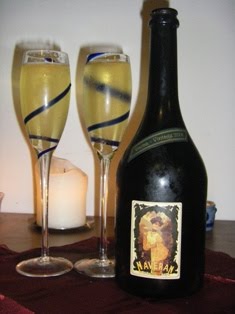
Cava: Naveran Dama 2006

Patatas bravas with smoked paprika aioli
Ingredients: potato, oil, mayonnaise, extra virgin olive oil, lemon or lime juice, sriracha hot sauce, smoked paprika, cayenne

Arugula and parmesan salad
Ingredients: arugula, parmesan cheese, raisins, extra virgin olive oil, salt, pepper, (Sherry) vinegar


Balsamic braised kale and fried egg bruschetta
Ingredients: cracker, bean dip, kale, egg, extra virgin olive oil, balsamic vinegar, salt, pepper

Bean nachos
Ingredients: bean and veggie mix, tortilla chips, hot sauce


Fresh Kiwi (or any fresh fruit you have)

Out of a sparse fridge with nothing but some kale, arugula, a couple of eggs, leftover bean mix, parmesan cheese, a potato, and some pantry staples like oil, vinegar and seasonings came a beautiful meal, healthy, tasty and new. Try your own hand at tapas next time you need to clean out the odds and ends of the fridge for a fun and delicious meal.

Wednesday, March 24, 2010

Stylish Spring Drinks

            These days mixologists and thirsty patrons are searching for drinks that are chic and fashionable. More than just delivering trends, cocktails have come to be symbolic in the social scene. One makes a statement with their beverage of choice, whether it’s a $3 PBR, an earl grey infused martini, or a regular gin and tonic. Everything from glassware and presentation to flavors within contribute to a drink’s overall success. The same is true in the world of fashion where innovative designers create styles that strive to make you feel as good as they look.
            This season I’ve teamed up with Brooklyn stylist Ahnna Lee to translate styles coming off the runway into cocktails. Incorporating these 2010 Spring styles into mixology and choices at the bar will ensure a season full of exciting and tasty drinks. Just as the clothes you wear help project personal confidence, beauty and grace, so can your cocktails!


Stylish Mixology: Fashion Inspired Cocktails


Trend: Body jewelry and jewelry worn as clothing, think Egyptian, Mayan and Native American influence. Be stylish this Spring with statement jewelry pieces. Check our Bliss Lau.
Cocktail: Tangerine Dream (recipe follows)
Connection: Garnishes are the accessories and jewelry of cocktails and this drink is all about the garnish.

To make two servings of Tangerine Dream you will need:


2 tangerines
1 ½ ounces Cognac
Sparkling wine

Method
Cut the top of the tangerine off to expose almost the full width of the fruit. Cut around the inside perimeter and then slice off the inside flesh and reserve, do this over a bowl or glass to catch any juices and reserve. You don’t need to get all of the pulp out, but you want a sufficient hollow space to build the cocktail. Place the hollowed fruits inside the freezer to chill. Press the reserved pulp and juice through a small sieve to get about 2 ounces of fresh juice. Combine juice and Cognac in a shaker over ice, shake and strain into chilled tangerine cups, top with sparkling wine, serve immediately.

Tips: refill the cup with sparkling wine or water and enjoy the entire night, the longer it sits in the fruit, the more flavor the liquid takes on. This recipe works with any fruit in the orange family.


Trend: Handmade American western wear
Cocktail: Hudson Bourbon Manhattan
Connection: This trend is all about featuring a hand-crafted item and enhancing it with subtle compliments. You wouldn’t pair your Yuketen boots with an overpowering shirt or gaudy tights, so don’t mix artisan spirits with cheap mixers.


Trend: Ethnic prints
Cocktail: Chai Spiked Tea (recipe follows)
Connection: Incorporating international influences into your style demonstrates cultural awareness and sophistication. It is also a great way to break up basics and add flare. This cocktail uses flavors from India, home to beautiful styles and flavors, for an exotic and unique cocktail.

To make one serving of Chai Spiked Tea you will need:


3 ounces chilled Chai tea
1 ½ ounces vanilla vodka
¾ ounce cardamom simple syrup
½ ounce coconut milk
Cinnamon

Method
Combine all liquid ingredients over ice in a shaker, shake and strain over fresh ice, garnish with sprinkled cinnamon.


Staples and Must Haves: Keeping it Classy at the Bar


              How do you stay just as fashionable with drinks when out at bars? It’s just like maintaining a wardrobe, start with timeless classics then accessorize and incorporate a few up to the moment styles. Take the basic white collared shirt, for example, it can be dressed up or down and paired with almost anything. In the world of cocktails this is your basic martini, it can come in raspberry, lychee, chocolate or any number of playful flavors. Even plain a beautiful white collared shirt, simple as it is, can be so elegant, as can a well-made martini.
              Let’s say you’re out on a date, or going out with friends, and don’t know what to wear, chances are you reach for your go-to little black dress that is always appropriate and looks fabulous with anything. When you don’t know what to get out at the bar, go for the house specialty or the regional stand by. Bourbon in Kentucky, Vodka in Russia, Wine in Burgundy, or Margaritas at a Mexican place, Sake at a Japanese bar, and anything on a specials board. When in doubt, stick to the go-to for comfort and appropriate style.
               Many of us have a closet full of black, it goes with everything, it’s super chic, and we like to think slimming as well. Be adventurous! Forbid yourself from buying yet another black skirt, go for prints that attract your eye or other favorite colors, and save your style from dying of boredom. Take this risky task to the bar as well: try something funky and new by looking for drinks that feature ingredients you like. Don’t think basil has a place in cocktails, but you love strawberries? Try the herbed fruit gimlet, you might like it. Keep an open mind and both worlds of style will constantly evolve, keeping it diverse and fresh.


          Fashion is all about finding pieces that you connect with to enhance and bring out your inner and outer beauty. While enjoying cocktails is not as much of a necessity as getting dressed, if it is part of your life, make the effort to find your own style. Try new things, experiment at home, and the world of bars and drinks will soon transform from a simple activity into an outlet to express personality and showcase creativity.


Happy Drinking!

Sunday, March 7, 2010

Paul Pacult's Newest Aventure: Raising the Bar of Beverage Competitions

After serving 10 years as the judge director of the San Fransisco spirit competition, beloved American spirits and cocktails journalist and authority, Paul Pacult, is making a foray of his own into designing the Ultimate Beverage Challenges (UBC). This set of three competitions focused on spirits, cocktails, and wine will use systems developed over Paul’s diverse career to ensure thoughtful results that can serve as true industry standards. Despite all of the medals and points flying around these days, many awards continue to be based on marketing promotions, inside connections, a single subjective opinion, or a collective opinion of an unqualified group. Paul along with fellow founders David Talbot and Sue Woodley have organized a group of experienced and unbiased judges who will endure two to three day tasting sessions for each category and judge products blindly multiple times. After a lifetime of experience on all ends of the alcoholic beverage industry, Paul brings his knowledge, insight and passion to these competitions to create a dependable and long overdue system for determining the best of breed.

Interview with Paul Pacult by Tess Rose

Tess Rose: What made you decide to pursue the world of beverages professionally?
Paul Pacult:It was completely by accident, I wish I could tell you there was a grand plan but it was anything but. I started a landscaping business and [through that] met the famous Sonoma County wine maker Rod Strong in1973. After I landscaped his new winery in Windsor CA, I stayed on to work for him, I ended up staying 10 years. Having the understanding from the production side has made me a more sensitive judge and more demanding critic. Towards the end of that period with Rod, who was a prolific writer and believed in communication with customers, he asked me to ghost write for him to get newsletters out. The response was so favorable that he encouraged me to write professionally. I sent a few articles off to magazines and got accepted. It was such a kick seeing my work out there, people reading and commenting on it. I took Rod’s advice and moved to New York, it was the thing to do. To me New York is the center of the world.
I wrote for a bunch of magazines and also worked at Morrell and Company. Working there gave me phenomenally good experience, I really learned a lot. I left Morrell to consult and write and I opened up a wine school called Wine Courses International. A bunch of New York Times people were taking my advanced course and they asked if I wanted to write for them. Of course I wanted to write for the New York Times! They wanted me to write about Scotch Whisky, but I didn’t know anything about Scotch and I didn’t even like it. But that’s what they wanted, so they sent me to Scotland to do 5000 words on Scotch. I was so excited as soon as I hit Scotland, even though it was very impolitic to write about spirits art that time. I wrote 10000 words and thought they would ask me to slash and burn it down to 5000, but they loved it and wanted to print all of it. 28 pages, it was a sensation. Times phones were ringing off the hook. 2 weeks after it came out they hired me to do 3 more for 1990, and within two years I was the spirits guy in America. That’s how I got into the spirits thing…it’s all the fault of the New York Times.

TR: How did The Spirit Journal come about?
PP: Everyone was sending me their products to write about it, I was inundated with spirits and so I started the Spirit Journal. Robert Parker convinced me to do a newsletter rather than a magazine so it could be independent with no advertising. The spirits industry needed something to see what was coming, so I review things 2 months before they hit the market place and I have established myself as a fair, unbiased evaluator through the journal. That’s been the platform for UBC. I hope people trust the fact that I am independent. Sue and I make no money from journal, it pays for itself, but no profit. That’s ok, people understand we keep it pure and unadulterated, people have responded to that. When I think I can’t taste anymore, the next day someone will call and say thanks for turning me on to Armagnac, and I think, I can’t stop now. Self perpetuating reality that I have, The Spirit Journal will keep going until the day I die, and so be it.

TR: How did you come up with the idea for the ultimate beverage challenges?
PP: I’ve been a judge in so many different competitions and I’ve always felt that there was a better way to skin the cat. There’s a more quantitative way to judge beverage alcohol than what’s out there. It was import to me not to impose my will on someone else, which would be rude, so I felt it would be better if I owned the competition so I could do what I wanted. I resigned from the San Francisco Spirit Competition, did a lot of research and came to the conclusion that methodology in beverage competition had not been altered since the 1880s. It was kind of a watershed period for wine and spirits in Europe and competition really took hold in France, Italy and Austria, but since that time there hasn’t been that much advancement in terms of methodology and I felt it was time to bring it into the 21st century.

TR: How does UBC incorporate 21st century methodology?
PP: By making judges more accountable for their findings. It used to be a roundtable discussion and I was always pressing people to be accountable for their choices, I always felt an obligation to the maker or distiller or brewer to give a justification behind the awards. The judges will be held accountable in UBC challenges, they will have to say why they are giving a product a particular score.
Another thing that bothered me about other competitions is that products would only go through one evaluation. The best way to give products a chance to shine is to make sure they go through a couple of times. I think sometimes competitions get overwhelmed with product so they have to rush through, that’s why were taking 3 days. Palates get tired, so one of the things we implemented right way was to have no more than 8 products in a flight and have extended periods of rest between so judges stay fresh and alert. It takes time.

TR: What is the philosophy behind the methodology?
PP:
Our whole theme is 3 fold: integrity, method, and accountability. [For the sake of] integrity, I wanted to get the best people possible to be judges. Also, it won’t be held in some cushy hotel but a place that is clinical and perfect for the event. For method, the products will be judged on a multi-staged basis; every product will be judged as fairly as possible, [judges] will not know the prices or what they are tasting ensuring that products are viewed as honestly and independently as possible. The credibility will follow from the thoroughness and honesty of the methodology.

TR: How will the results affect industry professionals like mixologists and restaurateurs beyond marketing?
PP:
We’re the new kid on the block, were standing on the shoulders of the other competitions that have come before us. The message is getting across already, it’s all about authenticity, were not doing this to try and get advertising in a magazine, were doing this to give results that will be viewed as the gold standard for the industry. I want to see UBC results looked upon as the one people go to.

TR: Can you elaborate on the cocktail challenge?
PP:
The cocktail contest is getting as much buzz as the other two combined. This is the first time products are actually going to be judged in classic cocktail recipes against each other, I’m curious to see how it will all pan out. Most competitions for cocktails are bartenders submitting new recipes for brands, and that’s good, I enjoy that, but spirits have never been viewed from this angle before: how do they all compare in classic drinks made by professionals, everyone using precise measurements and proper glass-wear? How the products stack up in that environment is new and interesting and I think it’s important to bring in innovations.

TR: Is this event designed to benefit consumers or industry professionals?
PP:
Both, my hope is that the consumer sector will take note and look at results on the website and other publications, I’m hoping they will absolutely look at these results as a touchstone for what’s good and what’s a mediocre. In the industry everyone’s clued in already, I think they see the value of what we’re trying to do. Consumers may take a bit longer in all honesty, but we’re in this for the long haul, this is really what I want to do for a long time to come.

TR: Will the event itself be open to consumers?
PP:
Consumers will get the chance to attend two events in the fall, one for spirits and cocktails and one for wine. Consumers will be able to come and taste the best of the best. The judging is demanding and we don’t want to interfere with judges’ concentration, so we will only be allowing 10-12 media people to observe without interfering. I think it is really important to let people see what we’re doing. A lot of competitions never allow media or people from the industry to come in and I think the opposite, within reason so the judges aren’t disturbed. It goes back to Obama and transparency, we need to let people observe.

TR: How will the winners be displayed to consumers?
PP:
We decided early on not to give medals. They are ubiquitous. If people are going to pay the entry fee they should get back thoughtfully arrived at results. We’re using a 100-point system rather than medals. Chairman’s Trophy is the highest award and there will be one for each category.

TR: What is your proudest professional accomplishment to date?
PP:
I’d have to say out of everything, I’m proudest of the independence we’ve maintained with The Spirit Journal. Sue and I started out and said we will never accept advertising or charge people to send us products or charge people for using the results. For 20 years we have absolutely maintained that.

TR: If you weren’t doing this, what would you be doing?
PP:
Wow…I just love doing this! I’d probably still be at the winery. I’d somehow be involved with beverage alcohol.

TR: What’s next?
PP:
Just continue, keep doing what we’re doing. I feel a real responsibility with UBC and to me it’s really important to get it right so that everybody can look at it and say that it’s the gold standard of competitions. I want to make sure that’s going well, who knows after that. Write paperback novels or something.


Ultimate Beverage Competitions are taking place now at New York’s Astor Center, visit the UBC website for information on attending the fall galas that will showcase the winners of each competition.

Friday, February 26, 2010

Brooklyn's Hot Spots: Anella

The village atmosphere of Brooklyn's Greenpoint has inspired small business owners in the food and wine industry to do great things. Anella, a relatively new neighborhood restaurant, embodies the mellow and understated hip atmosphere that makes Greenpoint so popular.  The rustic design and friendly staff make it clear that this spot is not about frills or gimmicks, just really great food in a comfortable environment.
 
             As relaxed as the décor and staff are, the attention to culinary detail and selection of ingredients is of the highest standard. Working with local farms and using sustainable ingredients wherever possible, Anella caters to the sophistication and social awareness of the neighborhood.  The modern American/Mediterranean food is comforting and wholesome. There’s no molecular gastronomy here, the creativity of Chef Ogrodnek relies on his intuitive balancing of natural flavors present in high quality ingredients. He walks the fine line, making everything on the menu approachable without being boring.
            Alfred DiScipio equally contributes to the charm of Anella with seasonal cocktails and thoughtful wine list. They feature wines from lesser-known regions of Italy, as well as wines sourced from local companies, including wine from the Hudson Valley and wine from a Brooklyn-based company. Each wine is carefully selected to compliment the food’s flavors and style as well as the overall philosophy of Anella.
             The team here make it seem effortless, the superior customer service, the delicious food, the crafted cocktails and deliberate wines, and a feel-at-home environment. Though it’s often these simple effects that are the hardest to achieve. Already so accomplished and focused, Anella promises to serve the Greenpoint community satisfying dining experiences for a long time to come. 
To Eat:
Brussle Sprouts with Lemon, Capers and Garlic Confit: The tanginess of the lemon and the saltiness of the capers along with the deep nuttiness of the nicely colored brussle sprouts is an example of Chef Ogrodnek’s ability to combine simple high quality ingredients and create a dish that sings in the mouth. You must try this dish.
Hot Coppa, Ricotta and Fried Egg Pizza: Hot from their brick oven, the soft egg acts as a sauce for this rustic pizza, creating a flavorful and rich snack. 
Calamari: A perfect example of a simple classic done spectacularly, the calamari was crisp and lightly fried on the outside and oh-so-tender on the inside, served with anchovy mayo for an extra burst of flavor.
To Drink:
Spiced Ruby Sidecar: This chilled and refreshing drink is perfect in cooler months, featuring a winter spiced simple syrup and ruby port for extra depth and warmth. 
Millbrook Tocai Fruilano: Made from the Tocai grape in the style of the wines of Friuli, this Hudson Valley version holds its own with peachy aromas, mineral flavors and a crisp finish.
Alpha Zeta Valpolicella: Coming from Brooklyn’s own Communal Brands, this classic Italian wine is fresh, fruity, and a perfect compliment to Anella’s menu.